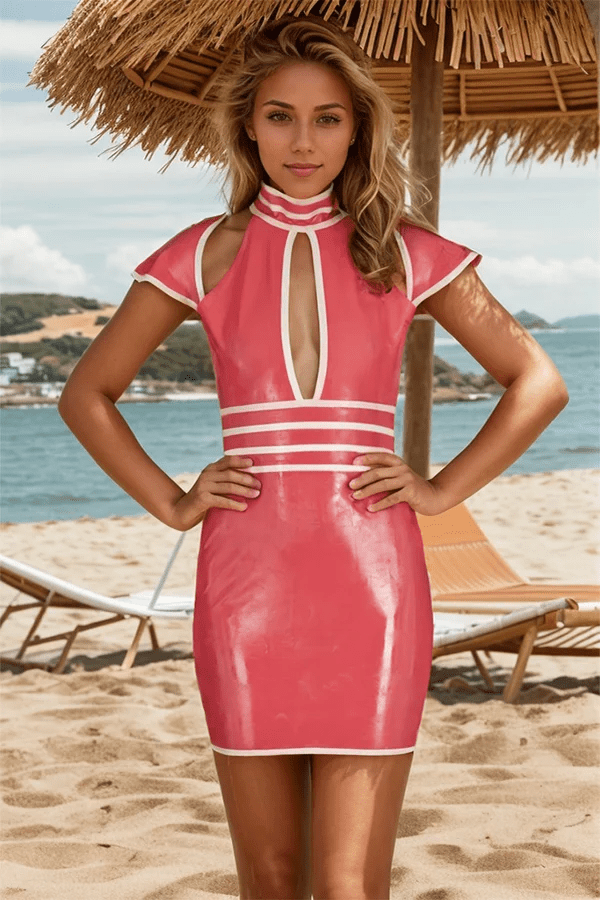
Pink is complicated. It can be playful or powerful, innocent or provocative, soft or striking. When that pink takes the form of a high collar latex dress, it becomes something entirely its own — a garment that defies easy categorization.
A pink high collar latex dress is not the obvious choice. It’s not the classic black, the passionate red, or the cool blue. It’s a statement that says: I choose what I wear on my own terms. This guide explores what makes this particular combination — pink, latex, high collar — so distinctive, and walks you through everything you need to know to wear it well.
Key Takeaways
- Pink latex offers a unique tension between softness and boldness.
- The high collar adds structure and drama, transforming a playful color into something commanding.
- Fit is critical — pink shows every line and imperfection more visibly than darker colors.
- Dressing technique must be especially careful with light-colored latex to avoid marks and damage.
- Care routines for pink latex require extra attention to prevent fading and color transfer.
Part One: The Color Pink — More Than Meets the Eye
Pink carries baggage. It has been assigned to gender, to seasons, to moods. But when you choose pink latex, you’re stepping into a conversation about what color means — and rewriting the rules for yourself.
The Spectrum of Pink
Not all pink is the same. The shade you choose fundamentally changes the character of the dress.
- Baby pink: Soft, delicate, almost innocent. A baby pink high collar dress creates striking contrast — the sweetness of the color against the structure of the collar, the boldness of latex. This shade works beautifully for those who want to subvert expectations, pairing something traditionally “gentle” with a material that demands attention.
- Hot pink: Vibrant, unapologetic, electric. Hot pink does not whisper — it shouts. This is for moments when you want to be seen, remembered, and impossible to ignore. On a high collar dress, hot pink becomes almost architectural, the color amplifying the drama of the silhouette.
- Dusty rose or blush: Muted, sophisticated, grown-up. This pink carries none of the playful connotations of brighter shades. It reads as elegant, understated, and surprisingly versatile. A dusty rose high collar dress can work for formal events, creative settings, or anywhere you want color without volume.
- Magenta or fuchsia: Deep, rich, intense. These shades sit at the boundary between pink and purple, carrying the energy of both. They are bold without being brash, sophisticated without being somber.
Why Pink Demands Confidence
Wearing pink latex requires a particular kind of confidence. It is not a color that fades into the background. People will notice. They may have assumptions. But that is precisely the point — you are wearing something that asks to be seen, and you are choosing to wear it anyway.
For many wearers, this is the appeal. Pink latex becomes a tool for reclaiming the color, for deciding what it means on your own terms. Whether you pair it with delicate accessories for contrast or lean into its boldness with equally strong styling, the color becomes part of your expression, not a statement someone else makes for you.
Part Two: The High Collar — Structure Meets Softness
The high collar transforms any dress. On a pink garment, that transformation is especially striking.
What the High Collar Does
A high collar does several things simultaneously:
- Frames the face: The collar draws the eye upward, making your face the focal point. On a pink dress, this framing effect is softened by the color but still commanding.
- Elongates the silhouette: The vertical line of the collar creates an unbroken visual path from your face down through the dress, creating a lengthening effect.
- Adds presence: A high collar changes how you hold yourself. You stand taller, move more deliberately, inhabit the garment differently.
- Creates tension: The combination of a structured, formal collar with a color often associated with softness or playfulness creates visual interest. This tension is what makes a pink high collar dress so distinctive.
Collar Styles
High collars come in variations that affect both look and comfort:
- Standing collar: Firm, vertical, often fastening at the back. This style offers the most structure and drama but requires precise fit.
- Folded or turtleneck style: Softer, more flexible. The latex folds over itself, creating a layered look. This style can be more forgiving in fit.
- Keyhole or cut-out collar: A small opening at the front or back breaks up the solid line of the collar, adding visual interest and sometimes making dressing easier.
Fit for the Collar
The collar is the most sensitive part of the garment. Getting the fit right is not optional — it’s essential for both comfort and safety.
When measuring for a high collar dress, measure your neck circumference at the height where the collar will sit. For a standing collar, this is typically at the base of the neck. For a turtleneck style, it may sit higher.
The collar should be snug enough to stay in place without shifting, but loose enough that you can slide a finger between the collar and your neck comfortably. If you cannot fit a finger, the collar is too tight. If the collar shifts or gaps when you move your head, it is too loose.
If you are between sizes or have any uncertainty, made-to-measure is strongly recommended for high collar garments. A collar that fits poorly will never be comfortable, and discomfort in the neck area is not something to tolerate.
Part Three: Fit — The Visibility Factor
Pink latex shows everything. Wrinkles, fingerprints, smudges, and fit issues are all more visible on light-colored latex than on black or dark shades. This makes fit particularly important.
The Challenge of Light Colors
Dark latex hides imperfections. Light latex reveals them. A pink dress will show:
- Every wrinkle or air bubble from dressing
- Fingerprint smudges from handling
- Seam lines if the dress is twisted
- Any pulling or tension marks from poor fit
This visibility means you cannot rush. Each step of the dressing process matters more. The payoff, however, is worth it — a properly fitted, smoothly dressed pink latex dress is stunning in a way that darker colors cannot match.
Critical Measurements for Pink Latex
Beyond the standard bust, waist, and hip measurements, pay special attention to:
- Torso length: A dress that is too short will pull at the shoulders, creating visible tension lines. A dress that is too long will bunch, creating wrinkles. Both are more visible on pink.
- Shoulder width: If the shoulders are too narrow, the dress will pull. If too wide, the collar may gap. Both issues show clearly on light latex.
- Seam alignment: When trying on a dress (or having one made), check that the seams run straight down your sides and center. Twisted seams are immediately apparent on pink.
The Comfort Test
A pink high collar dress should feel secure but not restrictive. Move through a range of motions while wearing it:
- Raise your arms. Does the hem lift excessively?
- Sit down. Does the dress pull at the shoulders or bunch at the waist?
- Turn your head. Does the collar shift or resist?
- Take a full breath. Can you expand your ribcage without resistance?
If any of these movements cause discomfort or visible distortion of the dress, the fit needs adjustment.
Part Four: Dressing — Handling with Care
Dressing a pink high collar dress requires extra attention. The color shows marks easily, and the high collar demands precision.
Preparation
Start with clean, dry skin. Shower and dry thoroughly. Remove all jewelry. File any rough nail edges. Lay the dress flat on a clean, light-colored surface where you can see any smudges or dust.
Choosing Your Dressing Aid
For pink latex, silicone lubricant is generally preferred over powder. Silicone creates a barrier that helps prevent fingerprints and smudges. Powder can sometimes leave visible residue on light-colored latex if not applied evenly.
Apply silicone generously to your neck, shoulders, torso, and arms. Turn the dress inside out and apply silicone to the interior, paying special attention to the collar area, the zipper path, and any areas where latex might bunch.
The Rolling Method — Step by Step
- Turn the dress inside out. This protects the exterior surface from handling marks during dressing.
- Roll from the hem upward toward the collar. Roll tightly but without stretching the material.
- Step into the rolled dress carefully. Place one foot at a time. If you have long or sharp toenails, consider wearing thin nylon socks for this step.
- Slowly unroll upward. Use your palms — never fingertips or nails. If you need to grip, use the rolled portion of the dress, not the unrolled surface.
- When you reach the hips, pause. Slide your hands inside the dress to check for twisting. This is easier to fix now.
- Continue unrolling. At the shoulders, slide one arm in at a time.
- For the collar: this is the final and most delicate step. Gently ease the collar around your neck. If it resists, add more silicone to the collar area. Never pull or stretch.
- Have a partner help with the back zipper if present. Use a zipper pull to avoid gripping the latex itself.
Smoothing and Handling
Once the dress is on, you’ll need to smooth out wrinkles and air bubbles. Use your palms, not fingertips. Work from the hem upward, pushing air toward the edges.
If you see a fingerprint or smudge, it can often be buffed out with a soft cloth. For stubborn marks, a small amount of silicone on a cloth can help lift them.
Avoiding Common Issues
- Fingerprints: Handle the dress by the rolled portion or by areas that won’t be visible. If you must touch the exterior, use the pads of your fingers, not the tips.
- Smudges from dressing aid: Wipe excess silicone from your hands before handling the exterior of the dress. Keep a cloth nearby for quick cleanups.
- Sticking during dressing: If the latex sticks to itself or your skin, pause and add more silicone. Forcing it will create wrinkles or tension marks.
Part Five: Care — Preserving the Pink
Pink latex requires careful maintenance to keep its color vibrant and its surface clean.
The Fading Factor
All latex fades with exposure to UV light, but light colors fade faster and more visibly than dark ones. A pink dress left in sunlight will lose its vibrancy, becoming washed out or taking on an uneven tone.
Storage Protocol
- Store in a cool, dark place. A closet away from windows is ideal.
- Dust with talcum powder before storing to prevent sticking. For pink latex, use white powder — tinted powders can transfer color.
- Use a wide, padded hanger. Thin hangers can create pressure marks that show on light latex.
- Keep pink separate from darker colors. Black and red latex can transfer to pink during storage, creating stains that are difficult to remove.
- If folding, use acid-free white tissue paper between layers. Avoid colored paper, which can transfer.
Cleaning for Pink
The cleaning process for pink latex is the same as for any quality latex, but with extra attention to residues:
- Rinse with cool water immediately after wearing.
- Fill a basin with lukewarm water and a small amount of latex cleaner or mild, colorless dish soap. Avoid soaps with dyes — they can stain light latex.
- Submerge the dress and gently agitate. Soak for 5–10 minutes.
- Pay attention to the collar and underarm areas where oils collect.
- Rinse thoroughly until no soap remains. Residual soap can cause stickiness or dullness.
- Pat dry with a lint-free cloth. A white cloth is preferable — colored cloths can transfer if wet.
- Hang on a padded hanger or lay flat to dry. Keep away from direct sunlight and heat.
Restoring Shine
Once dry, apply a latex shiner suitable for light colors. Some shiners are formulated specifically for white and pastel latex to prevent yellowing or clouding. Buff gently with a soft cloth until the gloss returns.
Addressing Color Transfer
If your pink dress picks up color from another garment or surface, address it immediately. Wash with cool water and mild soap. For stubborn transfer, a specialized latex cleaner may be needed. Prevention is easier than correction — store pink separately and avoid contact with dark surfaces during wear.
FAQ
Is pink latex more difficult to keep clean than black latex?
Yes, in the sense that marks and smudges are more visible. However, the cleaning process is the same. The difference is that you’ll notice when your pink dress needs cleaning sooner, and you’ll need to be more careful during dressing to avoid visible fingerprints.
What skin tones work best with a pink high collar dress?
All skin tones can wear pink — it’s about finding the right shade. Baby pink complements fair and light skin tones. Hot pink pops against deeper skin tones. Dusty rose works across a wide range. The high collar frames your face, so consider how the shade interacts with your skin’s undertones — cool pinks for cool undertones, warmer pinks for warm undertones.
Can I wear a pink high collar dress to a formal event?
Yes. Choose a more sophisticated shade — dusty rose, blush, or magenta — and style it with refined accessories. Keep the makeup and jewelry minimal to let the dress speak. The high collar already provides structure and presence, making it suitable for many formal settings.
How do I prevent the pink color from fading?
Store the dress in a dark place away from sunlight and UV exposure. Avoid wearing it for extended periods in direct sunlight. When cleaning, use products designed for colored latex. With proper storage, pink latex can maintain its vibrancy for years.
What should I do if my pink dress gets a stain?
Act quickly. Rinse with cool water. If the stain persists, use a small amount of latex cleaner directly on the area and gently rub with your fingers. Rinse thoroughly. Avoid harsh scrubbing or abrasive materials. For stubborn stains, consult the dressmaker or a latex care specialist.

 Latex young gathering place
Leave a comment